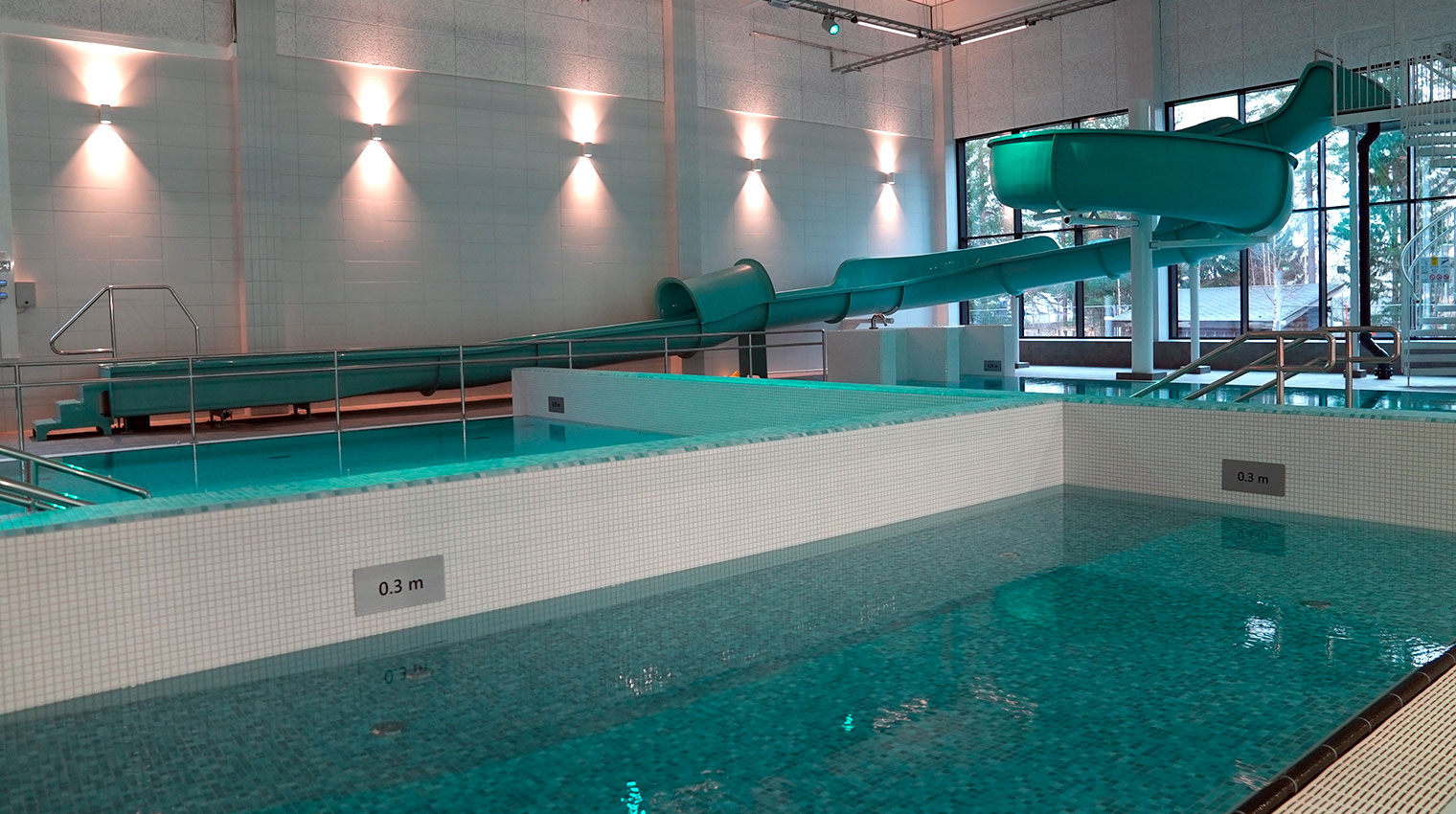
Kuortane’s new swimming centre is heated using ground-source energy
Kuortane’s new swimming centre is a demanding sports and swimming facility, where the large volume of pool water, high demand for domestic hot water and year-round use place high demands on the heating system. Ground-source heating was chosen as the heating solution for the facility, and energy is also utilised efficiently through heat recovery.
The swimming centre, completed on the grounds of the Kuortane Sports Institute, represents a significant investment in the institute’s future. The building replaces the old swimming pool, which had been in use for over 50 years and had reached the end of its service life. Instead of a new swimming pool, it was decided to build a versatile swimming centre in Kuortane that supports both physical activity and leisure use as well as the needs of elite sport.
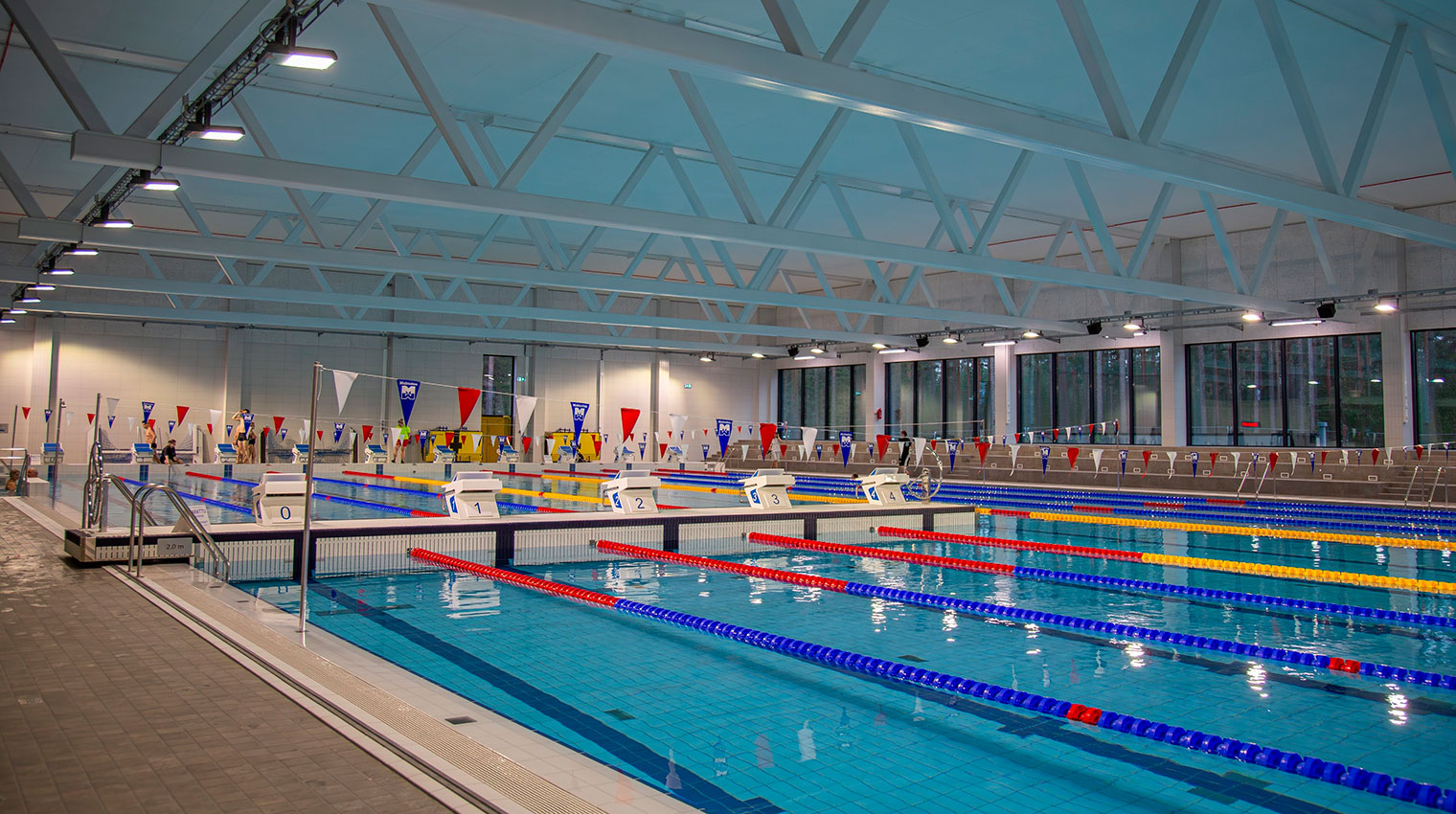
The swimming centre features an Olympic-sized 50-metre pool with ten lanes.
“We wanted to foster growth and develop our activities, rather than simply building something identical in size or design to the old swimming pool,” explains Jaakko Niiranen, Managing Director of the Kuortane Swimming Centre.
“This is Finland’s third pool of this size, after Mäkelänrinne and Kuopio’s Kuntolaakso. In terms of facilities, the swimming centre is on a par with both a spa and a top-level swimming training centre,” he adds.
The large volume of pool water placed special demands on the system
The total area requiring heating at the swimming centre is substantial. The building’s gross floor area is 6,210 m², the heated floor area is 3,188 m² and the heated volume is 40,350 m³. The pool area of the facility is large, and the volume of water in the Olympic-sized pool alone is approximately 2.5 million litres. In addition, the building contains other pools and facilities whose heating, ventilation and domestic hot water requirements make the complex energy-intensive.
In a swimming centre, the heating system must offer high operational reliability and the capacity to meet continuous heating demands. Heat is required for heating the premises, domestic hot water, the pools and the ventilation system.
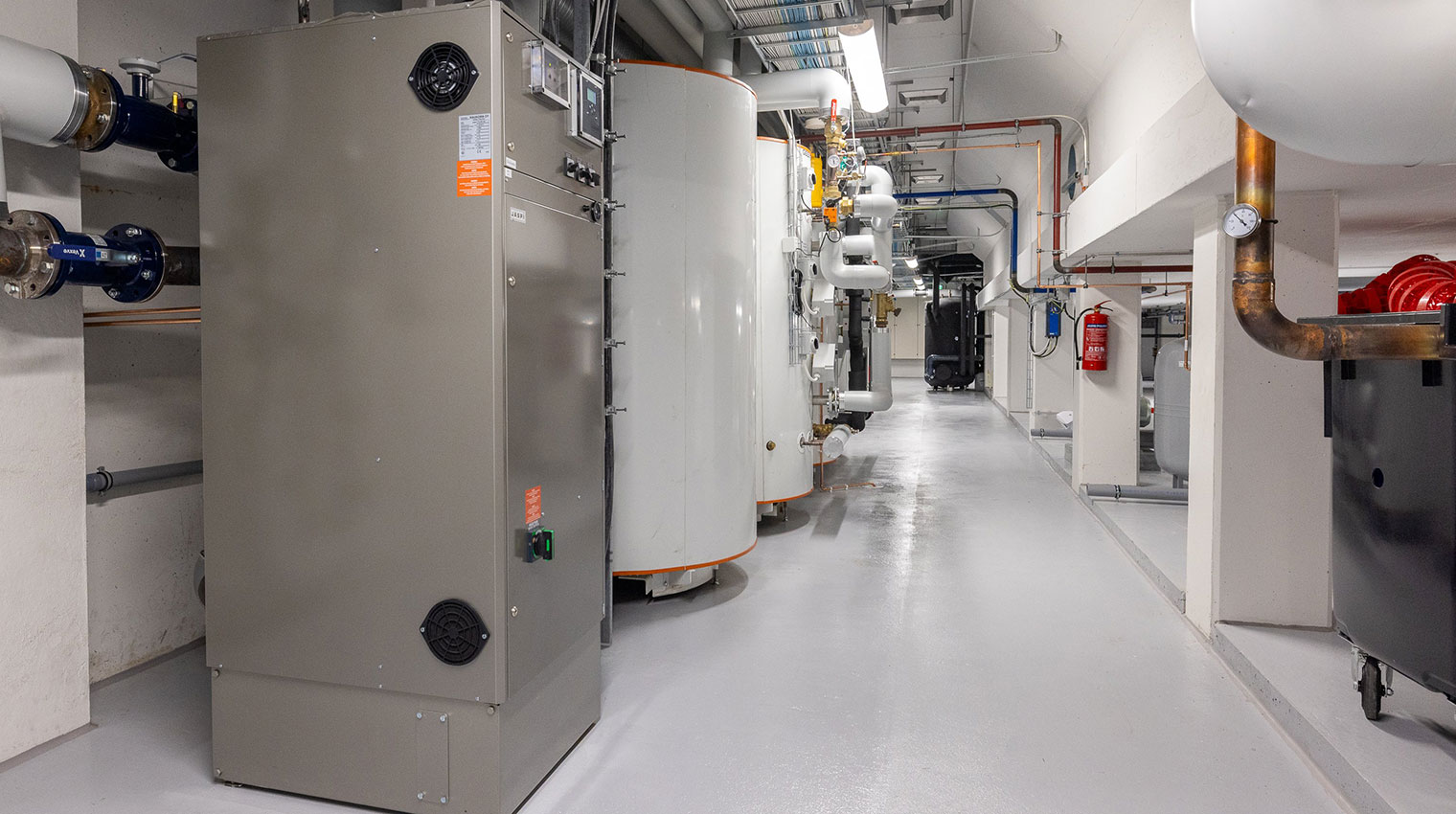
Gebwell supplied the Kuortane Swimming Centre with heat pumps, storage tanks, district heating substations for sauna bench cooling, and heat exchangers for heating the pool water. The equipment forms part of a comprehensive system designed to meet the heating requirements of a large swimming centre in an energy-efficient and reliable manner.
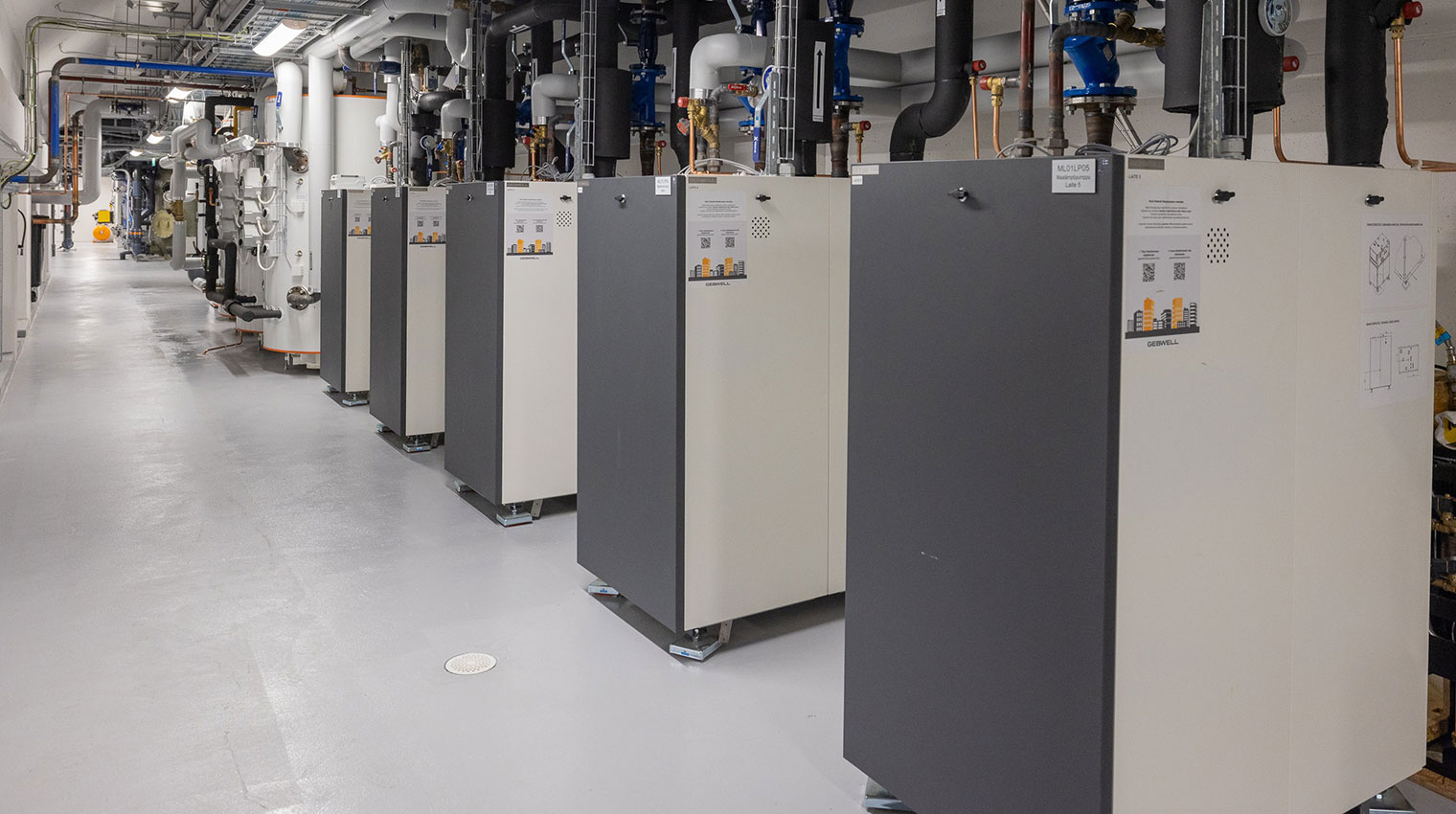
– The site’s heat production is based on five Gebwell Taurus heat pumps and 45 energy wells, each approximately 300 metres deep. The heat pumps are used to heat domestic hot water, the ventilation system and the swimming pools, explains Kari Mänty, Managing Director of LVI-Asiantuntija Oy.
Domestic hot water is heated using superheated heat
– Each heat pump has a superheating system, the heat from which is channelled to the domestic hot water tank to heat the water. Heat pump one – the master unit – and heat pump two are primarily used for domestic hot water, Mänty continues.
There are 90 kW of electric heating elements as a backup for domestic hot water production. In addition, a separate electric boiler serves as a backup heat source for heating.
Heat recovery from ventilation and shower water
The system also utilises heat recovery.
– Heat is recovered from the ventilation units, and in some of the ventilation units, heat recovery is achieved using glycol. Heat is also recovered from shower water. The heat recovered from the shower water is used to heat the collection circuit, i.e. the energy heat wells. In this way, the waste heat generated in the building can be utilised as part of the overall ground-source heating system, explains Mänty.
A system for cooling the sauna benches was also installed at the site.
– The original idea was to feed pool water directly to the benches, but the solution was modified to a more efficient closed-loop system. In this solution, the benches form the secondary side and the primary side is supplied by the pool water. The advantage of the closed system is that air does not accumulate in the benches and the system operates reliably, Mänty continues.
Gebwell supplied the district heating substations required for cooling the sauna benches.
Ground-source heating was the natural choice
The heating system at the Kuortane Sports Institute had already been converted to ground-source heating. Ground-source heating was also chosen as the heating solution for the new swimming centre, as it supports the Sports Institute’s carbon neutrality target and has also proved to be economically sensible in practice.
– You often hear people say that being environmentally conscious is expensive. In practice, we have found that, at least for us, the change has also made excellent financial sense. That is why we felt it was only natural to choose ground-source heating for the swimming centre as well, says Niiranen.
The Swimming Centre’s estimated energy consumption is 1,730 MWh per year. Of this, ground-source heating is estimated to account for around 970 MWh and the solar power plant for around 130 MWh. The amount of energy purchased is estimated at around 630 MWh.
Domestic and local factors influenced the choices
From the client’s perspective, the design and construction phases progressed smoothly. The handover of the project took place on 28 April 2026, and the swimming centre opened to the public on 11 May 2026. Test swims were organised prior to the opening, during which no significant shortcomings or faults were observed.
Kuortane Sports Institute aims to prioritise local and domestic products in its procurement. Contractors from the surrounding area were involved in the swimming centre’s construction work, and the use of Finnish-made machinery and equipment was also a key consideration.
– We aim to source as much as possible from the local area. If we cannot find what we need locally, we look to neighbouring municipalities. We have been delighted that local contractors have also been our partners on the swimming centre projects. Domestic origin is also a significant factor when it comes to machinery and equipment,’ says Niiranen.
A successful project is easy to showcase
Kuortane’s new swimming centre has attracted interest even since the construction phase. Various organisations have visited the site, and the client has spoken openly about both the implementation and the contractors and suppliers involved.
– It has been easy to showcase this successful project and also to recommend the same equipment, Niiranen advises.
The Kuortane Swimming Centre is an example of a new-build project in which high heating requirements, sustainability targets and operational demands have been combined with a ground-source energy solution. The project demonstrates that, even in demanding sports and swimming centre projects, a heat pump solution can be a sound choice in terms of both the environment and operating costs.
Swimming pool projects are familiar territory for LVI-Asiantuntija
– “Admittedly, this project was, in a way, full of special features throughout the entire system, but this was already the third swimming pool we’ve completed, and the next one – the fourth – is currently under construction in Lapua, also using Gebwell heat pumps. So this is starting to become familiar territory,” says Mänty.
Project at a glance
Project: Kuortane Swimming Centre Ltd, Kuortane
Intended use of the building: a multi-purpose swimming pool and elite swimming training centre
Size: gross floor area 6,210 m², heated area 3,188 m², volume 40,350 m³
Pool complex: Olympic-sized 50-metre pool, 10 lanes, plus other pools
Energy solution: ground-source heating and a solar power plant
Energy well boreholes: 45, average depth approx. 300 m
Estimated energy consumption: 1,730 MWh/year, of which ground-source energy accounts for approximately 970 MWh/year, solar power for approximately 130 MWh/year and purchased energy for approximately 630 MWh/year
Gebwell’s supply: 5 Taurus EVIC110 heat pumps, three 2,000-litre storage tanks with vertical coils, one 2,000-litre storage tank, two district heating substations and titanium heat exchangers
Contractor: LVI-Asiantuntija Oy
Project handover: 28 April 2026
Opening to the public: 11 May 2026