
G-Power E-Flow district heating substation
District heating with more efficient cooling
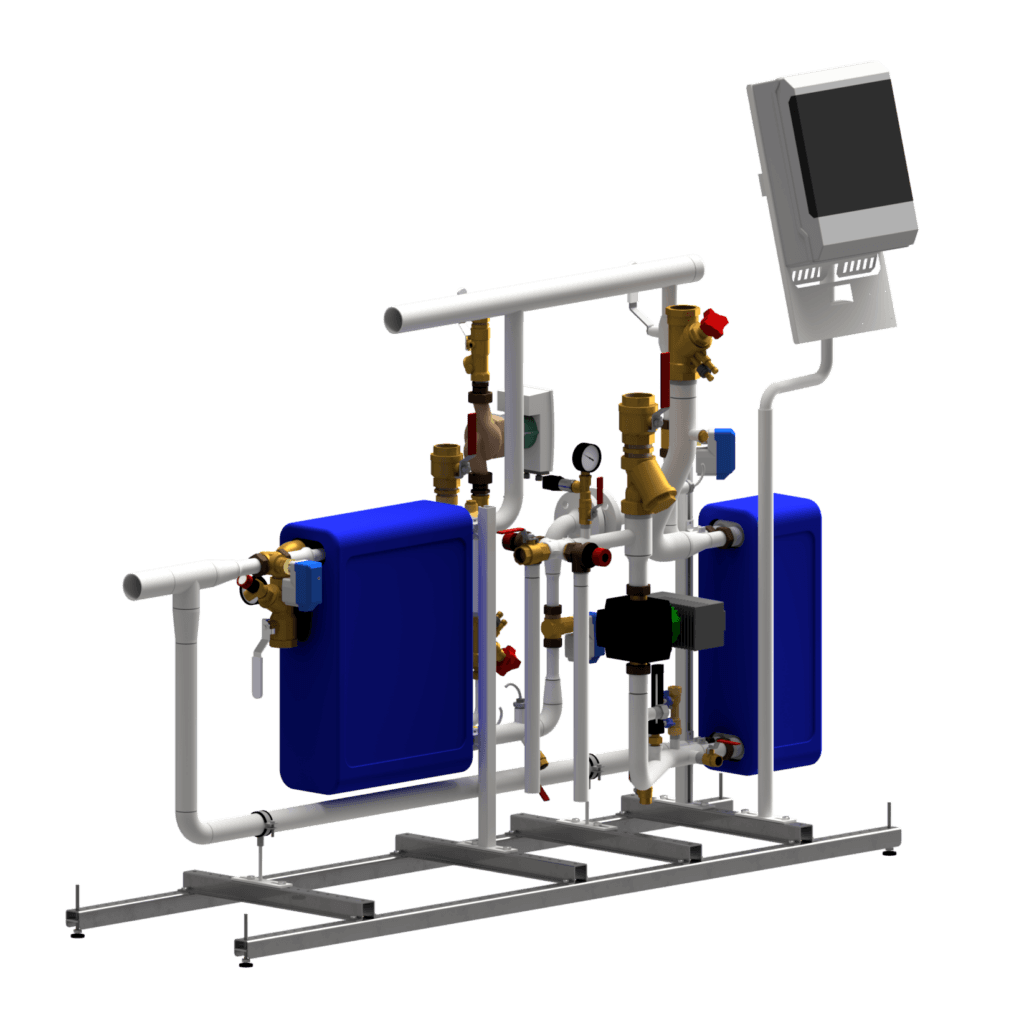
More efficient cooling with the E-Flow connection
Keeping the return temperature of the district heating network as low as possible is essential for energy efficiency and environmental sustainability. A lower return water temperature reduces heat losses in the network, minimises the need for pumping and improves the energy efficiency of production. Furthermore, a more stable and lower return temperature supports the development of low-temperature networks and facilitates network optimisation without changes to production or network temperature levels. This leads to lower fuel consumption and reduced greenhouse gas emissions, supporting sustainable development.
With the G-Power E-Flow district heating substation, the temperature of the water returning to the district heating network can be significantly reduced compared with traditional connections. In the E-Flow system, the heat from the district heating water used to heat the domestic hot water circuit is utilised to heat the heating network before being returned to the district heating company. This improves the energy efficiency of the district heating network and enables optimal use of energy.
As district heating becomes increasingly electrified, a low return temperature offers even better conditions for energy utilisation and sustainable heat production. In a block of flats in Kotka, the E-Flow connection improved the cooling of the district heating return water; read more on our blog.
For housing associations, the lower district heating return water temperature provided by E-Flow can lead to savings on heating costs. For instance, in Finland in many larger towns and cities, the return water temperature is used to determine the basic district heating charge.
G-Power E-Flow district heating substation
- Energy-efficient district heating
- The temperature of the water returning to the district heating network is significantly lower than with a standard connection.
- The system utilises the heat from the district heating water used to heat the domestic hot water circulation to heat the heating network before the district heating water is returned to the district heating company.
- Suitable for both radiator heating and low-temperature heating networks.
- Manufactured in Finland
To request a demonstration, contact our sales team
E-Flow connection
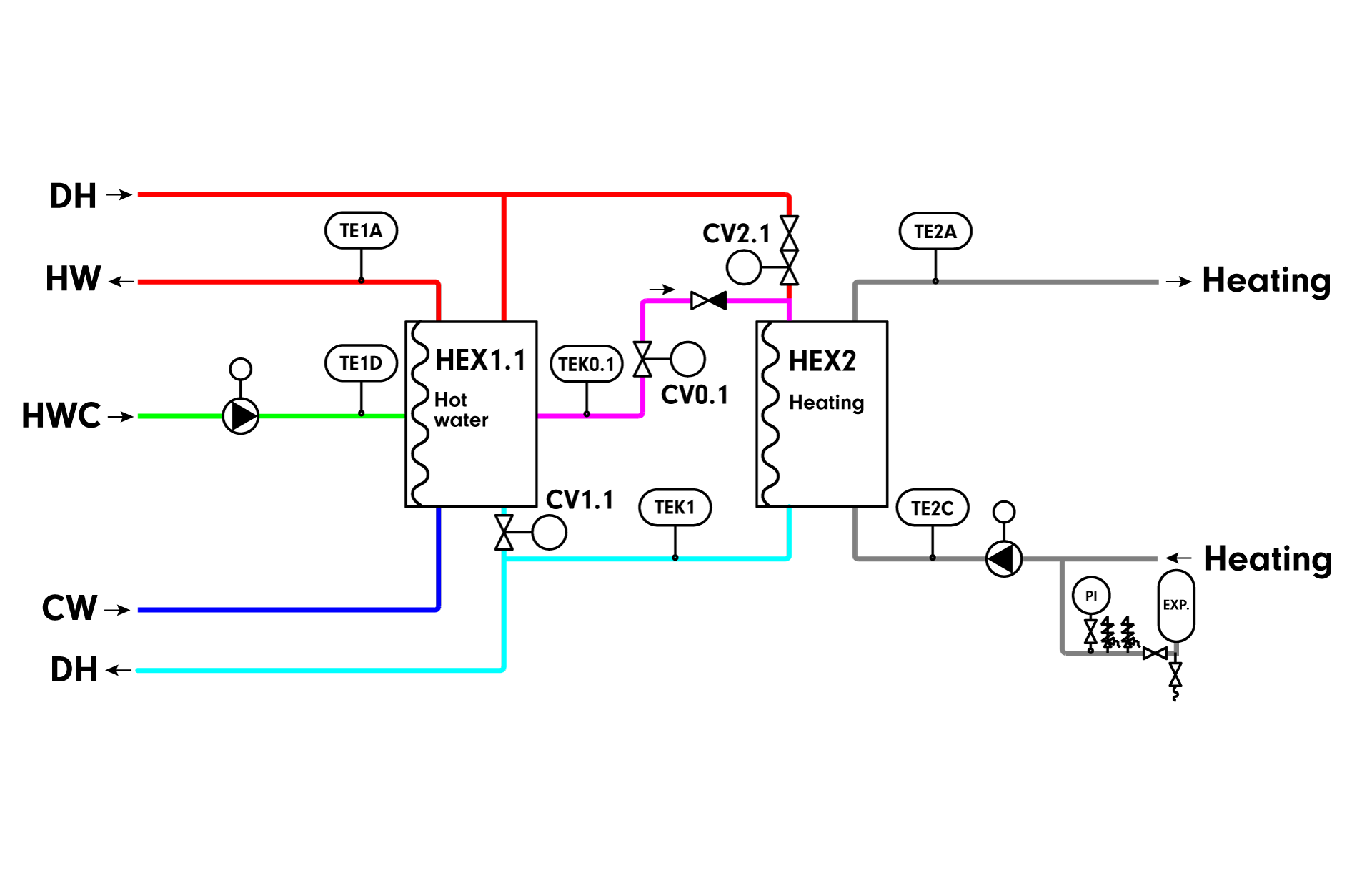
Operating description, domestic hot water
The control system regulates control valve TV1.1 based on the reading from domestic hot water sensor TE1A, maintaining the domestic hot water temperature at the setpoint (+58 °C)
Operating description, heating
The control system controls the control valves TV2.1/TV2.2 in series based on the readings from the supply water sensor TE2A and the outdoor sensor TE2B, maintaining the supply water temperature in accordance with the control curve.
Limitation of valve TV2.1 opening in accordance with the TE1A measurement. Valve TV2.1 closes if the measurement value from sensor TE2C (+Hysteresis) is greater than or equal to the measurement value from sensor TEK2
Alternative E-Flow connection – for 50–80 and 60–80 heating networks
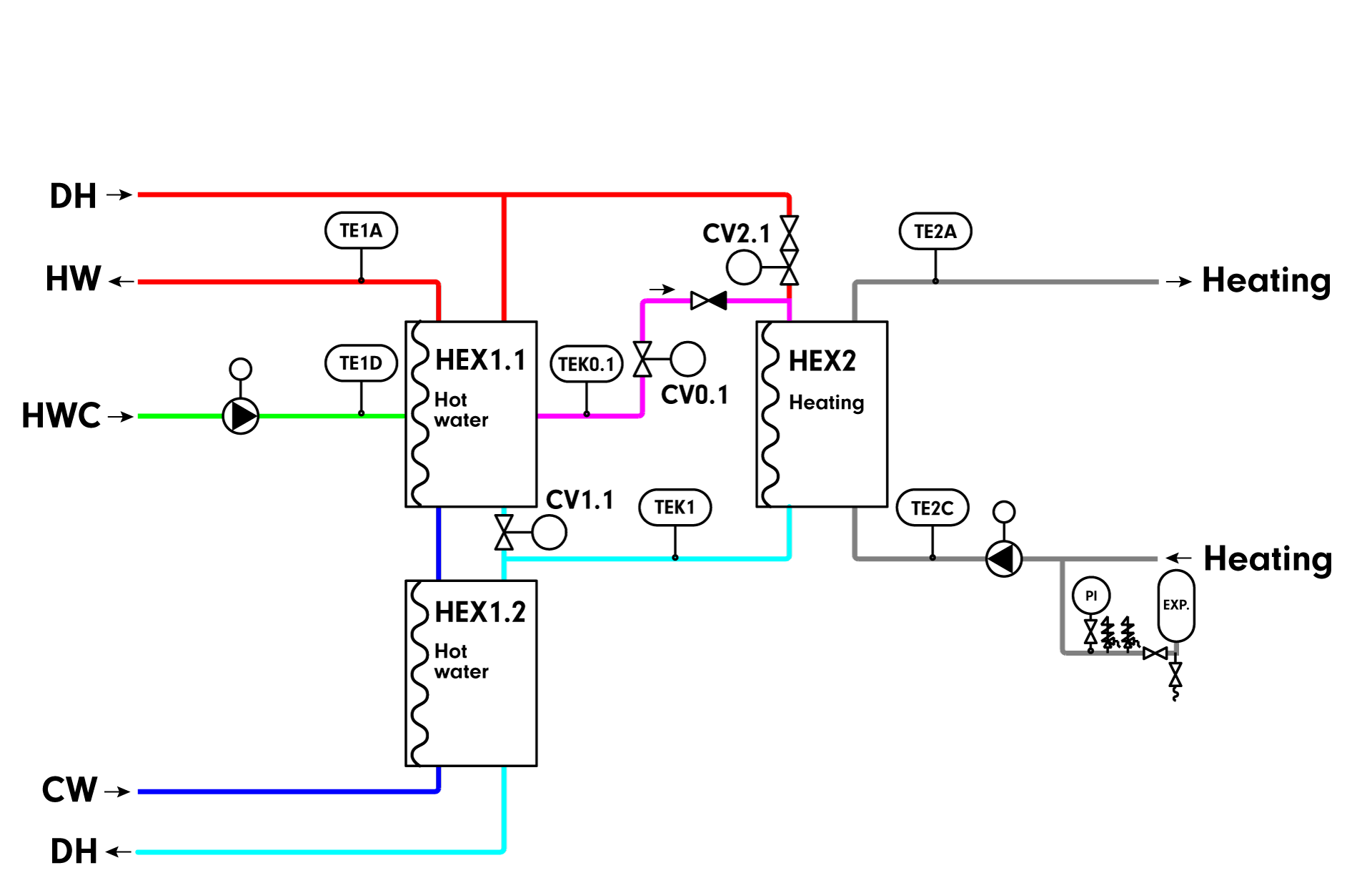
“The increase in cooling is quite significant when temperatures remain at these levels.” – Technical expert at a major energy company
Request a quote for this product
Tell us about the project and its necessary capacity and we will respond with details regarding sizing.